
Vehicle Emergency Kits: What Belongs in Your Car When Life Gets Tough
Key Takeaways
- A vehicle emergency kit should cover roadside repairs, communication, first aid, water, food, visibility, and protection from bad weather.
- Keep frequently needed supplies in the glove box or passenger compartment and larger tools in the trunk or cargo area.
- Adjust your kit for seasonal hazards such as snow, ice, heavy rain, and high temperatures.
- A vehicle kit and a bug-out bag serve different purposes, so keeping both gives you more options during an emergency.
A dead battery, flat tire, road closure, sudden storm, or evacuation can leave you stuck miles from home. Your vehicle gives you shelter and transportation, but it can’t solve every problem on its own.
A properly stocked vehicle emergency kit gives you basic tools and supplies for the problems drivers are most likely to face. The National Highway Traffic Safety Administration recommends carrying items such as a phone charger, first aid kit, flashlight, jumper cables, drinking water, nonperishable food, blankets, and basic repair tools.
The best kit is organized around what you can reach quickly and what can stay stored in the back.
Survival Kit Check List for Car Emergencies
A useful survival kit list for car preparedness should cover both the vehicle and the people riding in it. Jumper cables won’t keep you warm overnight, and a blanket won’t help with a dead battery.
Start with these categories:
- Communication: Cell phone charger, portable power bank, emergency contact information, and local map
- Visibility: Flashlight, reflective warning triangles, reflective vest, and whistle
- Vehicle tools: Jumper cables or jump pack, tire pressure gauge, jack, lug wrench, basic tools, and duct tape
- First aid: Bandages, gauze, gloves, antiseptic supplies, and other first aid basics
- Hydration: Commercially bottled drinking water
- Food: Shelf-stable snacks that don’t require cooking
- Weather protection: Blanket, rain poncho, gloves, hat, and extra clothing
- Sanitation: Hand sanitizer, wipes, paper towels, and trash bags
Check the owner’s manual before adding vehicle-specific repair equipment. A jack, wheel wrench, spare tire, tire repair equipment, or other tools aren’t useful unless they’re compatible with your vehicle and you know how to use them.
What to Keep in the Glove Box
The glove box should hold supplies you may need before you ever step out of the vehicle.
Keep a charging cable, small flashlight, emergency contact information, paper map, pen, notepad, and a compact first aid kit. A seat-belt cutter or other emergency escape tool should also be stored where the driver or passenger can reach it, not underneath luggage in the trunk.
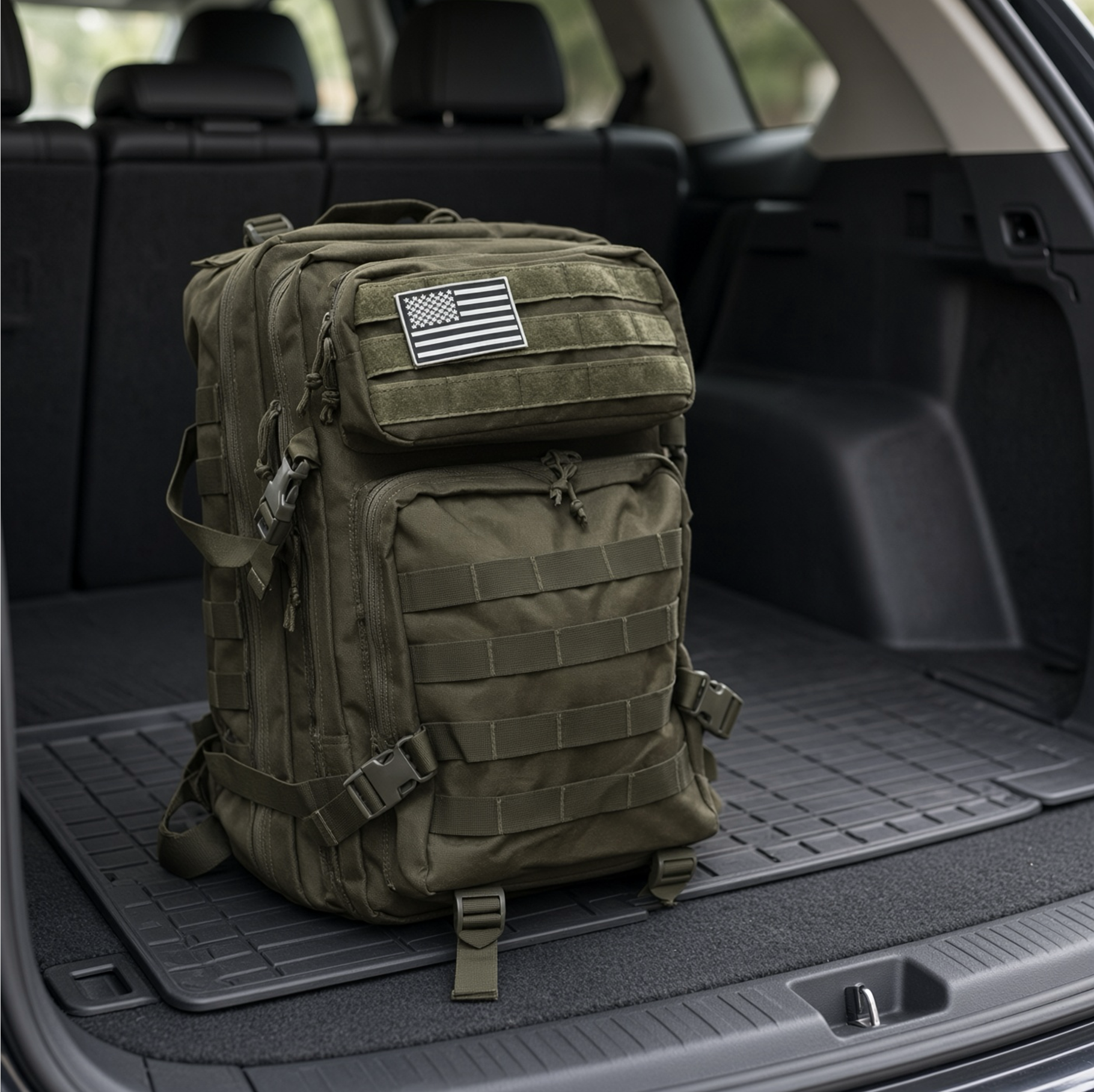
A compact vehicle emergency kit such as an everyday-carry kit can also fill this role without taking up most of the passenger compartment.
Don’t pack the glove box so tightly that finding one item becomes a project. Immediate-access gear should be visible and organized.
What to Keep in the Trunk
The trunk or cargo area is where the heavier equipment belongs.
Your survival kit list for car storage should include jumper cables or a portable jump starter, reflective warning devices, work gloves, blankets, basic tools, tire equipment, a rain poncho, water, food, and seasonal gear.
Secure loose equipment. A heavy tool, water container, or battery pack shouldn’t be free to move around the passenger compartment during hard braking or a collision.
Check the kit regularly, too. The National Safety Council recommends inspecting vehicle emergency supplies every six months and replacing expired items.
STRANDED AUTO
Add Equipment for Heat, Snow, and Ice
One vehicle emergency kit won’t look exactly the same in Minnesota and Arizona.
For winter driving, FEMA and the CDC recommend adding supplies such as warm clothing, blankets, a shovel, ice scraper, snow brush, traction material, flashlight, jumper cables, water, and snacks. Depending on local conditions, tire chains or other traction equipment may also belong in the vehicle.
Heat creates different problems. Carry adequate drinking water and give extra attention to anything that has storage-temperature limits.
Medication deserves special care. The FDA advises keeping medicines away from heat and direct sunlight while traveling. Don’t leave prescription medicine in a vehicle indefinitely unless its labeling or your pharmacist confirms that the expected storage temperatures are acceptable.
Water needs attention as well. The CDC identifies unopened commercially bottled water as the safest and most reliable emergency option and advises observing the manufacturer’s expiration date.
A Vehicle Kit Doesn’t Replace a Bug-Out Bag
A car kit and a bug-out bag solve different problems.
Your vehicle emergency kit stays with the car. It includes equipment tied directly to driving and roadside problems, such as jumper cables, a tire gauge, warning devices, an ice scraper, or a shovel.
A bug-out or get-home bag is portable. If the vehicle has to be abandoned because of flooding, wildfire evacuation, mechanical failure, or another hazard, you need supplies you can carry.
FEMA recommends considering multiple emergency kits, including a full kit at home and smaller kits in vehicles and other places where you spend time. Keeping separate systems also means you aren’t constantly removing critical roadside gear every time you take your bug-out bag somewhere else.
Check Your Kit Before You Need It
Emergency gear isn’t something to pack once and forget.
Go through your survival kit list for your car at least twice a year. Check batteries, food dates, water, first aid supplies, seasonal clothing, and the condition of vehicle tools. Confirm that your spare tire is properly inflated if your vehicle carries one.
Make the same check before a long road trip or a period of severe weather.
LIMA-TANGO Survival builds emergency kits around field-tested equipment and practical use, not filler. Review our emergency survival gear and build a vehicle emergency kit that matches your vehicle, climate, passengers, and normal travel.
Life’s tough. Get tougher.
Frequently Asked Questions
What should I keep in my glove box for an emergency?
Keep compact supplies that you may need without leaving the vehicle, including a phone charger, flashlight, emergency contact information, paper map, pen, and small first aid kit. Emergency escape tools should also stay within reach of the driver or passengers.
What should I put in my trunk for emergencies?
Store larger roadside equipment in the trunk or cargo area. A strong survival kit list for your car includes jumper cables or a jump pack, reflective warning devices, work gloves, blankets, water, nonperishable food, tire equipment, basic tools, and weather-specific supplies.
What car emergency supplies are essential in extreme temperatures?
For cold weather, add warm clothing, blankets, gloves, an ice scraper, snow brush, shovel, and traction material. In hot weather, prioritize drinking water and inspect supplies that have temperature limits. Don’t permanently store medication in the vehicle unless its approved storage conditions allow it.
Do I need a separate car kit if I already have a bug-out bag?
Yes. A vehicle emergency kit carries car-specific equipment such as jumper cables, tire tools, reflective warning devices, and seasonal roadside supplies. A bug-out bag is designed to move with you if you have to leave the vehicle. Keeping both prevents one kit from being stripped to supply the other.