
Hurricane Evacuation: How to Make the Call Before a Storm
Key Takeaways:
- Know your evacuation zone before a hurricane threatens your area.
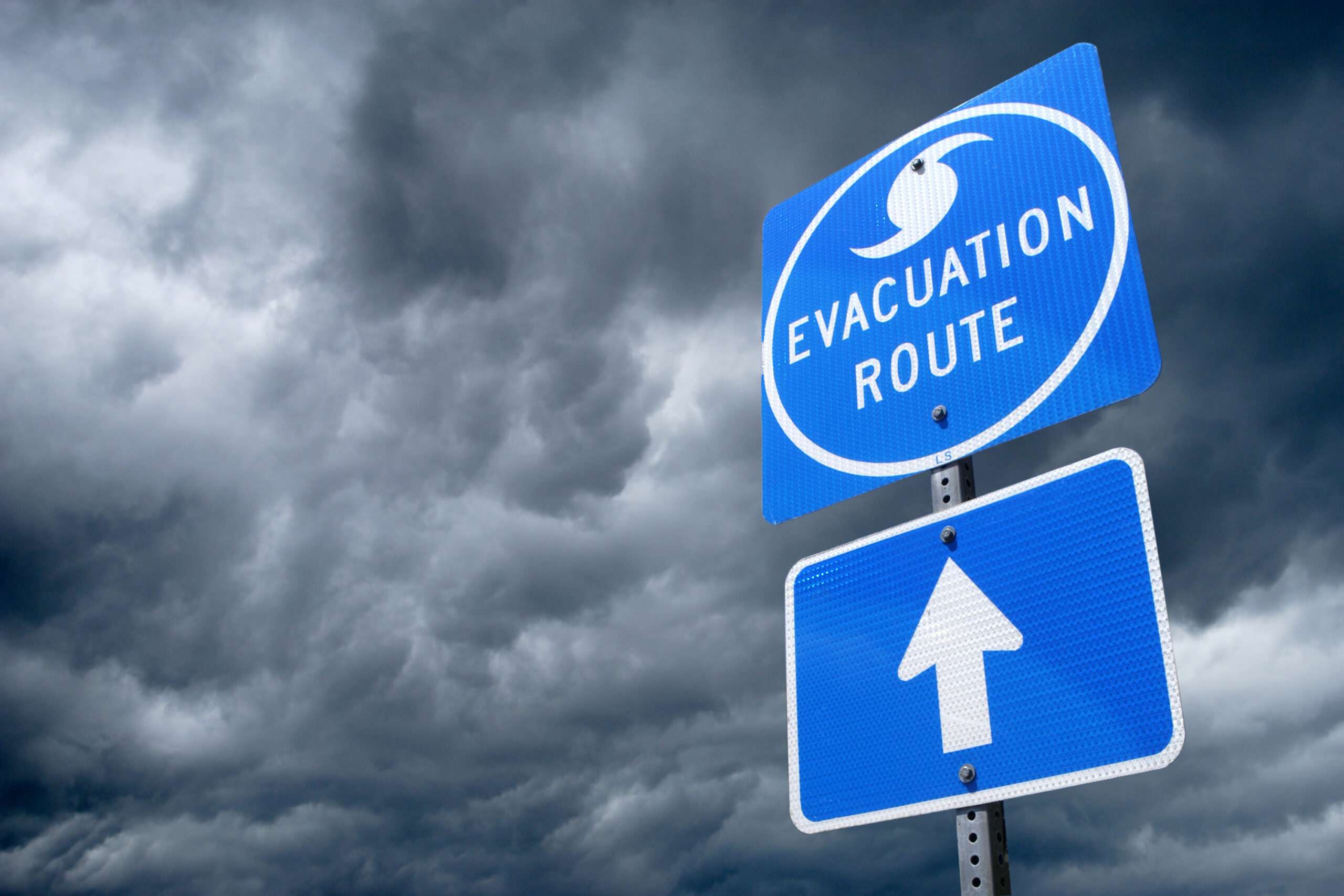
- Follow evacuation orders from local emergency management officials.
- A family evacuation plan should cover your destination, route, supplies, pets, and communication.
- If officials direct residents to stay home, shelter safely and keep monitoring local alerts.
The decision to evacuate should come from official information, not from what the weather looks like outside. Evacuation zones, storm surge, flooding, housing type, transportation, and instructions from local officials all affect the call.
A hurricane’s category measures maximum sustained wind speed. The Saffir-Simpson Hurricane Wind Scale does not account for storm surge, rainfall flooding, or tornadoes. A lower-category hurricane can still require evacuation in areas exposed to those hazards.
Know Your Evacuation Zone
Start with your address.
If you live in a hurricane-prone coastal area, check whether your home is inside a local evacuation zone. Your city, county, or state emergency management agency should provide the map for your area.
Don’t substitute a general flood map or storm-surge graphic for your local evacuation map. The National Hurricane Center storm-surge risk maps are planning tools. State and local officials establish evacuation zones using storm-surge information and other public-safety factors.
Save the map to your phone and keep a printed copy with your emergency documents. If authorities issue a hurricane evacuation order for your zone, follow it.
For more storm-preparation steps, review our hurricane season preparation guide.
Understand Watches and Warnings
A hurricane watch means hurricane conditions are possible within the watch area. The National Weather Service hurricane guidance states that watches are typically issued about 48 hours before tropical-storm-force winds are expected to begin.
A hurricane warning means hurricane conditions are expected. Warnings are typically issued about 36 hours before tropical-storm-force winds are expected.
Storm surge has separate alerts. A storm surge watch means life-threatening inundation, or flooding of normally dry coastal land, is possible, generally within 48 hours. A storm surge warning means there is a danger of life-threatening flooding, generally within 36 hours.
These alerts are not automatic evacuation orders. Use the time to prepare for a possible hurricane evacuation by checking your route, destination, vehicle, pet arrangements, supplies, and family evacuation plan.
When to Evacuate Before a Hurricane
If local officials order your area to evacuate, leave.
Don’t stay because your home survived a previous storm. The CDC hurricane safety guidance tells residents not to ignore evacuation orders, even when they live in a sturdy home.
People living in mobile or manufactured homes should pay close attention to local hurricane evacuation instructions and shelter guidance. If officials order you to evacuate, leave.
Your decision should also account for storm-surge and flood hazards, transportation needs, housing type, and instructions issued for your area.
Once officials tell you to leave, use recommended evacuation routes. Flooding, debris, downed power lines, or road closures can block other roads.
Never drive through floodwater. Our flood preparation guide covers additional planning for flood conditions.
Build a Family Evacuation Plan
Your plan should answer four questions:
- Where are we going? Choose a destination outside the evacuation area, such as a friend or relative’s home, hotel, or approved emergency shelter.
- How are we getting there? Identify a primary hurricane evacuation route and at least one alternate. During an evacuation, follow routes recommended by local officials.
- What are we taking? Pack medications, identification, important documents, cash, chargers, food, water, clothing, and emergency equipment.
- How will we communicate? Choose a family contact and decide how household members will check in if separated.
Include pets. Confirm that your destination accepts them, and pack the food, water, medications, carriers, leashes, and identification they need.
Keep paper copies of important phone numbers and addresses with your emergency documents in case your phone is lost, damaged, or out of power.
Prepare Your Vehicle and Emergency Gear
Make sure the vehicle you plan to use is ready to leave and that its emergency kit is stocked.
Keep water, shelf-stable food, a flashlight, first-aid supplies, weather protection, and basic tools in the vehicle so you aren’t rushing to find them during hurricane evacuation.
We recommend handling and organizing your survival equipment yourself. Packing your own kit lets you confirm what you have and learn where each item is stored.
A stocked vehicle kit gives you supplies to work with if traffic, weather, or a mechanical problem delays the trip. We cover the essentials worth keeping in the car in our vehicle emergency kit guide.
Pack Personal Items a Survival Kit Can’t Provide
No prebuilt kit knows your prescription, eyeglass strength, medical requirements, or identity documents.
Keep necessary medications accessible and follow each medication’s labeled storage instructions. Ask your pharmacist how to prepare prescriptions that require refrigeration or other special storage.
Pack spare prescription glasses or contact lenses if needed. Bring identification, necessary medical devices, important documents, cash, phones, and charging equipment.
Round out your evacuation gear with supplies for hydration, food, first aid, illumination, weather protection, communication, and basic tools.

When Should You Shelter in Place?
Follow instructions from local emergency officials.
The CDC notes that officials can direct residents to remain home when travel conditions are dangerous. If you are not under an evacuation order and authorities tell residents to stay home, remain indoors and monitor emergency alerts.
For protection from hurricane winds, the National Weather Service recommends staying away from windows and taking refuge in a small interior room, closet, or hallway.
Flooding and storm surge require different actions. Don’t assume a lower-floor interior room is safe if officials warn of rising water in your location. Follow instructions for the hazard affecting your area.
Keep a copy of your evacuation plan with your packed supplies while sheltering. Conditions and official instructions can change.
Follow the Plan When an Order Is Issued
A written family evacuation plan gives your household a destination, route, contact, and packing list before an order is issued. Review it before hurricane season and again when a storm threatens your area.
When local officials issue a hurricane evacuation order, follow the order and use the routes they recommend.
LIMA-TANGO Survival vets and tests the gear included in its emergency kits, with field-testing used to evaluate reliability. Review your plan, check your supplies, and get prepared with emergency gear from LIMA-TANGO Survival.
Life’s tough. Get tougher.
Frequently Asked Questions
Should I evacuate because a hurricane reaches a certain category?
Not necessarily. A hurricane category measures maximum sustained wind speed. It does not account for storm surge, rainfall flooding, or tornadoes. Check your local evacuation zone and follow instructions from state and local emergency management officials.
How far should I travel during a hurricane evacuation?
You don’t automatically need to travel hundreds of miles. Identify a safe destination outside the evacuation area before the storm, then follow local routing and destination guidance when an evacuation is ordered.
What should a family evacuation plan include?
Include your destination, primary and alternate routes, emergency contacts, transportation, pet arrangements, medical requirements, important documents, and emergency supplies.
Should I wait for an evacuation order before getting ready?
No. Learn your evacuation zone, establish your route, organize supplies, and prepare your vehicle before a hurricane threatens your community. If officials later order your zone to evacuate, follow their instructions.